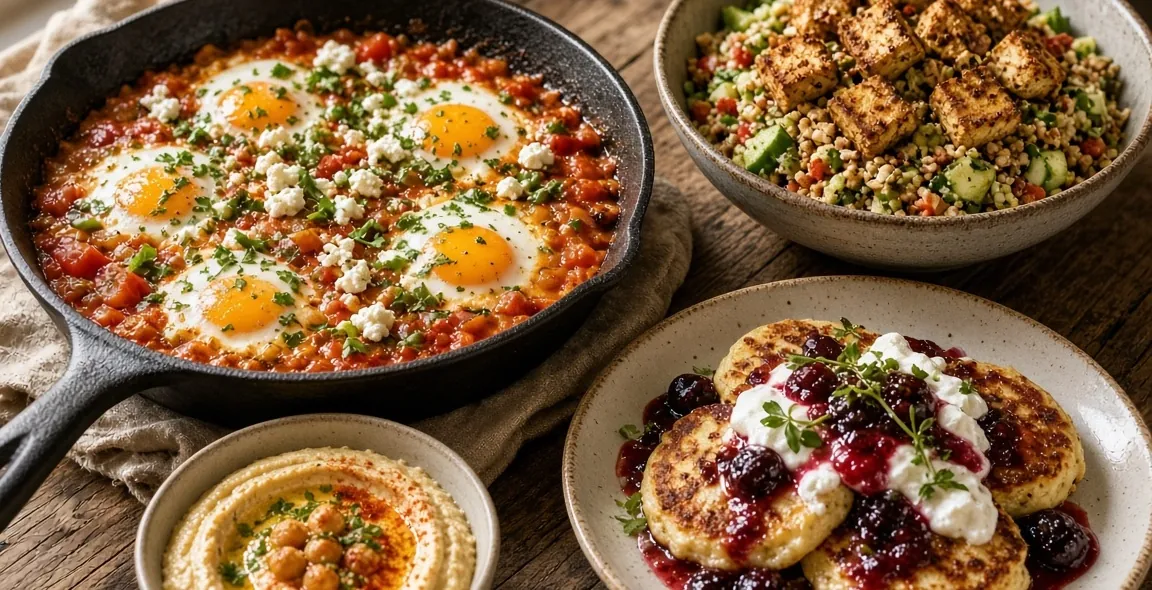
A vegetarian spread of eggs, tofu, lentils and cheese dishes on a table (serving suggestion)
High-protein vegetarian recipes + a 4-week plan

Meat-free, never protein-poor.

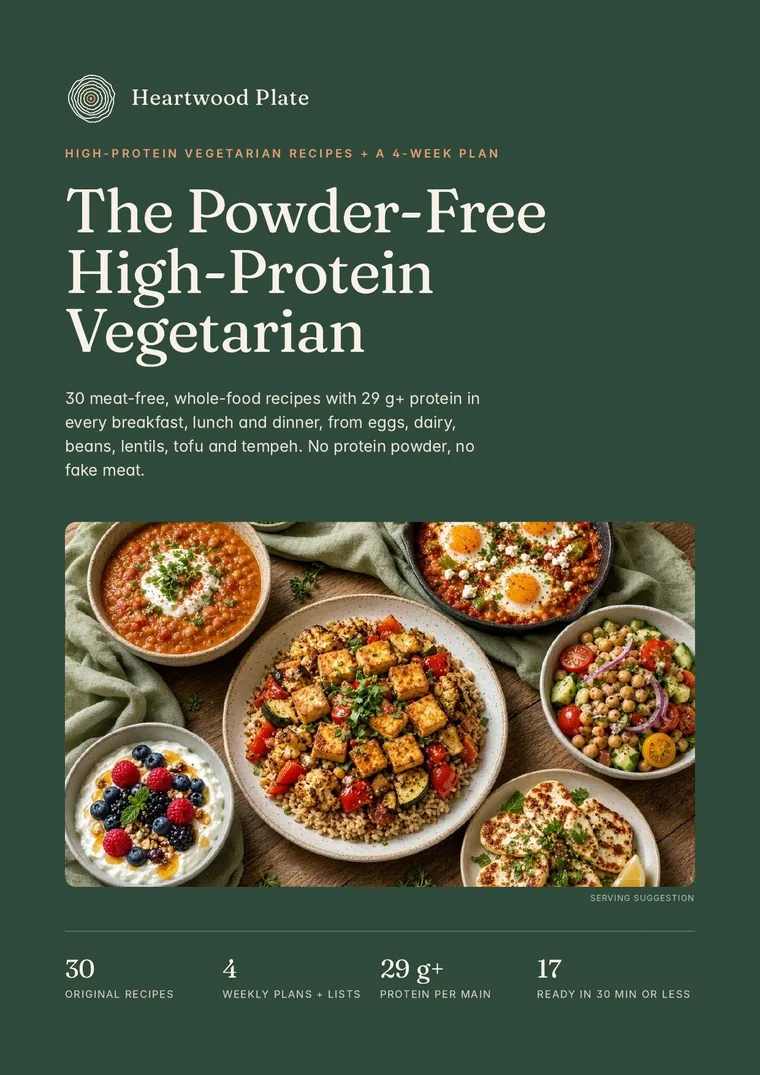
The Powder-Free High-Protein Vegetarian: 30 meat-free, whole-food recipes with 29 g+ protein in every breakfast, lunch and dinner, from eggs, dairy, beans, lentils, tofu and tempeh. No protein powder, no fake meat. Four weekly plans and grocery lists, with every number calculated from USDA data.

  • 50-page PDF
  • Metric + US measures
  • Instant digital download

Plus: use the Cookverter kitchen toolkit for free.

Cover of The Powder-Free High-Protein Vegetarian
$17PDF
“But where do you get your protein?” Every vegetarian has heard it.From the welcome page.

The honest answer is that it takes a little planning, because the easy wins of a chicken breast or a tuna can are off the table.

This book does the planning. Every breakfast, lunch and dinner gives you at least 29 g of protein per serving (on average 37 g), from eggs, Greek yogurt, cottage cheese, ricotta, mozzarella, tofu, tempeh, edamame, lentils and beans. No shakes, no scoops, no ultra-processed meat substitutes.

The 4-week plan covers breakfast, lunch, dinner and a snack every day for one adult who eats eggs and dairy (lacto-ovo vegetarian), with batch lunches, freezer-friendly bakes and quick weeknight dinners.

Why it’s different

Meat-free, never protein-poor.

1

No protein powder

Every breakfast, lunch and dinner has 29 g of protein or more (37 g on average), from eggs, Greek yogurt, cottage cheese, ricotta, mozzarella, tofu, tempeh, edamame, lentils and beans.

2

No fake meat

Protein comes from eggs, Greek yogurt, cottage cheese, ricotta, mozzarella, tofu, tempeh, edamame, lentils and beans. No shakes, no scoops, no ultra-processed meat substitutes.

3

Fast when it matters

17 recipes are ready in 30 minutes or less, from 9-minute Turkish-style eggs to 25-minute naan pizzas.

4

Lacto-ovo, planned

The 4-week plan covers breakfast, lunch, dinner and a snack every day for one adult who eats eggs and dairy, with batch lunches, freezer-friendly bakes and quick weeknight dinners.

5

Numbers you can check

Every ingredient is matched to a USDA FoodData Central entry and added up by script. Every ID is printed in the book.

6

Metric and US

Grams with cups, spoons and ounces alongside. Oven temperatures in °C and °F, for conventional and fan ovens.

It’s for you if…

  • You eat eggs and dairy and want more protein without meat
  • You’d rather cook with beans, tofu and eggs than buy meat substitutes
  • You want every meal of the day planned for you
  • You like batch lunches and freezer-friendly bakes
  • You want a weekly grocery list grouped by aisle

It’s not for you if…

  • You need a plan for a medical condition (ask your doctor or a dietitian)
  • You’ve been told to limit protein
  • You’re vegan (the book has vegan swaps, but most recipes use eggs or dairy)
  • You avoid soy completely (there are soy-free swaps, but tofu, tempeh and edamame appear often)
  • You want a physical book
From the contents page

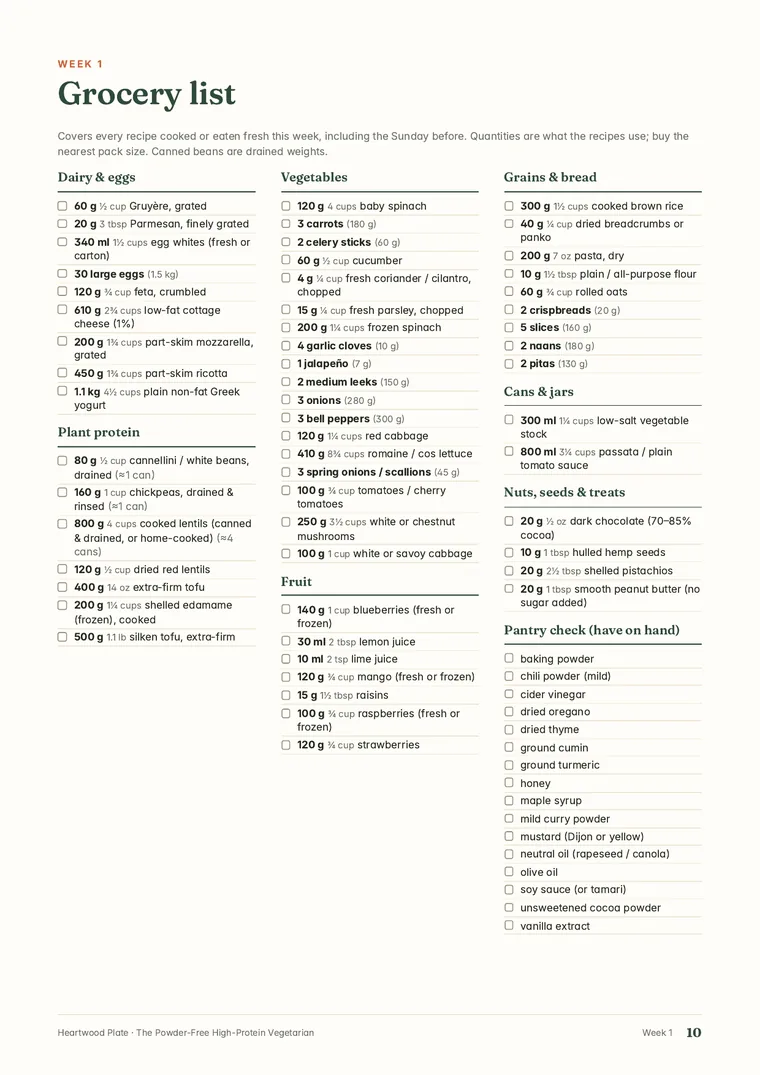
What’s in the 50 pages

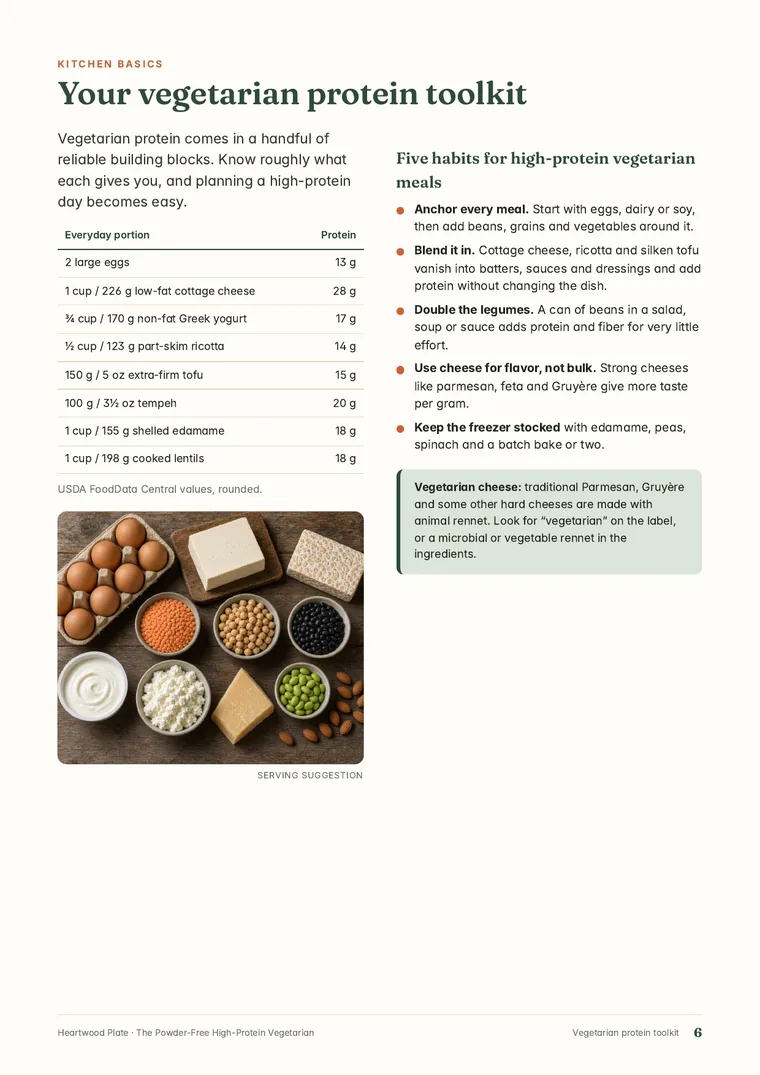
Kitchen basics on pages 6–7: Your vegetarian protein toolkit and Tofu, tempeh and beans, made delicious. Then four weeks of plans and grocery lists, the recipe chapters, swaps and a nutrition index.

SectionWhat it isPages
WelcomeWhy this bookp. 3
How to use this bookHow the plan worksp. 4
Protein, from real foodKitchen basicsp. 5
Your vegetarian protein toolkitKitchen basicsp. 6
Tofu, tempeh and beans, made deliciousKitchen basicsp. 7
Storing, freezing and food safetyKitchen basicsp. 8
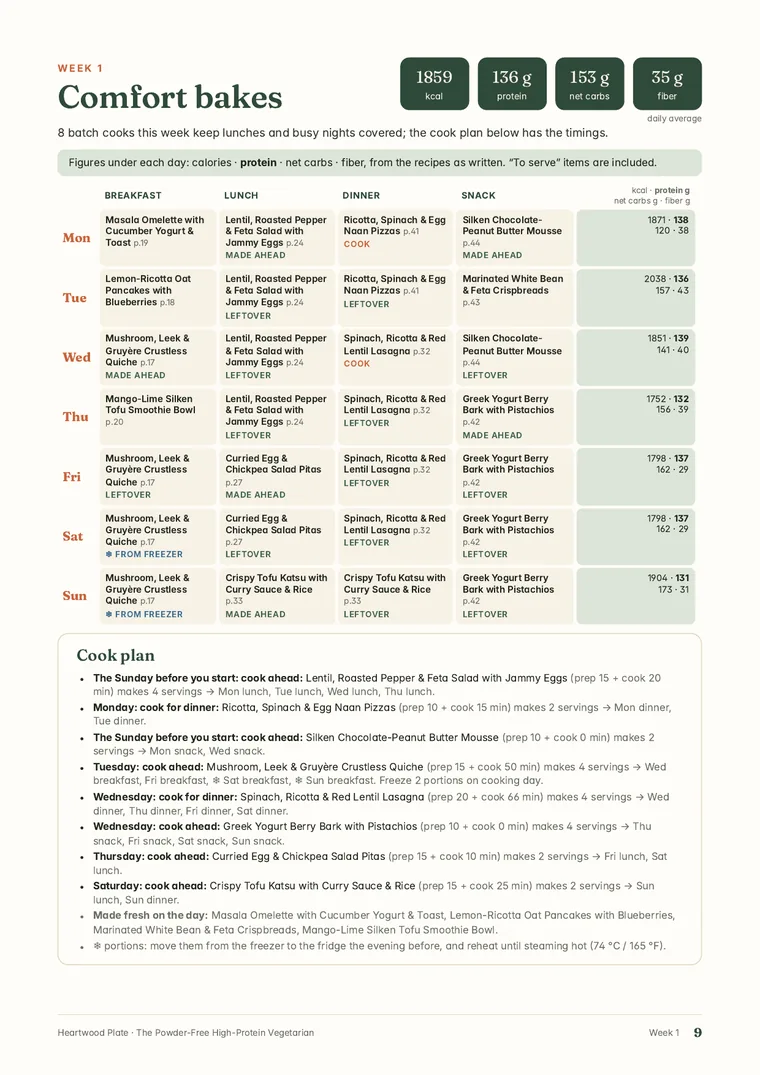
Week 1: Comfort bakesPlan + grocery listp. 9–10
Week 2: Spice and crunchPlan + grocery listp. 11–12
Week 3: Bowls and brunchPlan + grocery listp. 13–14
Week 4: Fresh and greenPlan + grocery listp. 15–16
Breakfasts7 recipesp. 17–23
Lunches8 recipesp. 24–31
Dinners10 recipesp. 32–41
Snacks5 recipesp. 42–46
Swaps and substitutionsSwapsp. 47
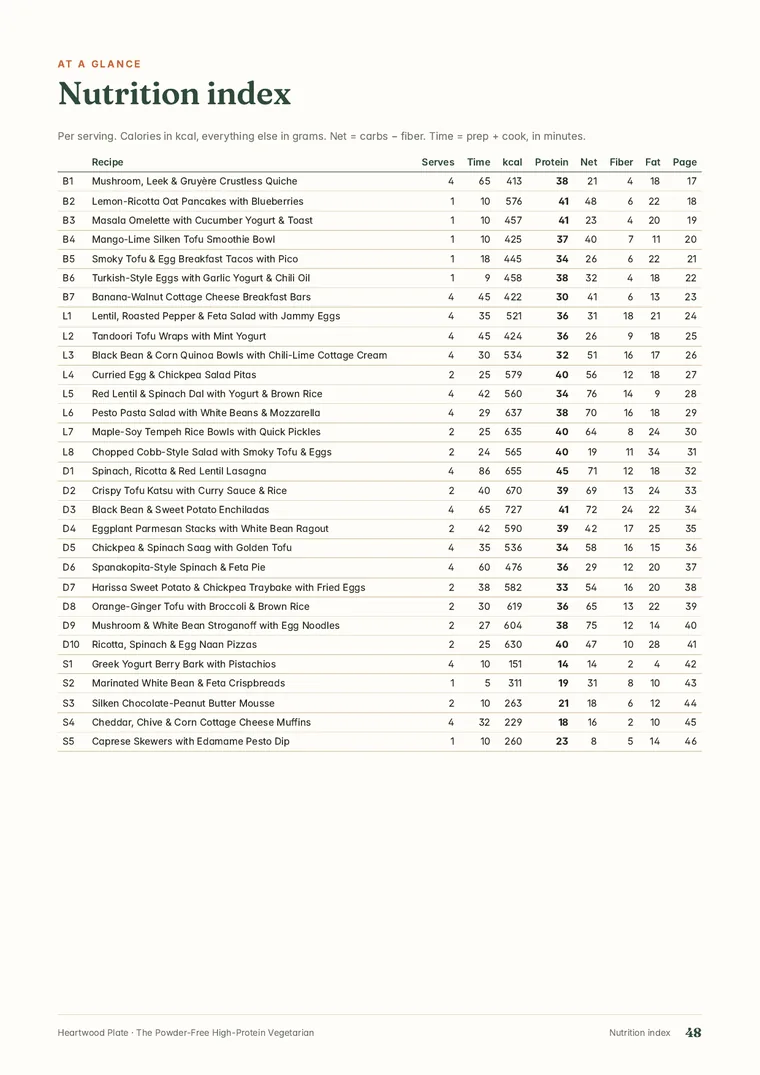
Nutrition indexAll 30 recipes at a glancep. 48
How we calculated + sourcesMethod and sourcesp. 49
What’s inside

50 pages, 30 recipes, 4 weekly plans

129 gprotein a day in the plan, on average
1,830kcal a day (1,498–2,050)
157 gnet carbs a day
37 gfiber a day
Free bonus

Cookverter kitchen toolkit. Cooking in cups or ounces? Use our free online converters for volume, weight, oven temperature and cups to grams by ingredient, plus a recipe scaler, at cookverter.com.

Get the book · $17

Try a recipe free

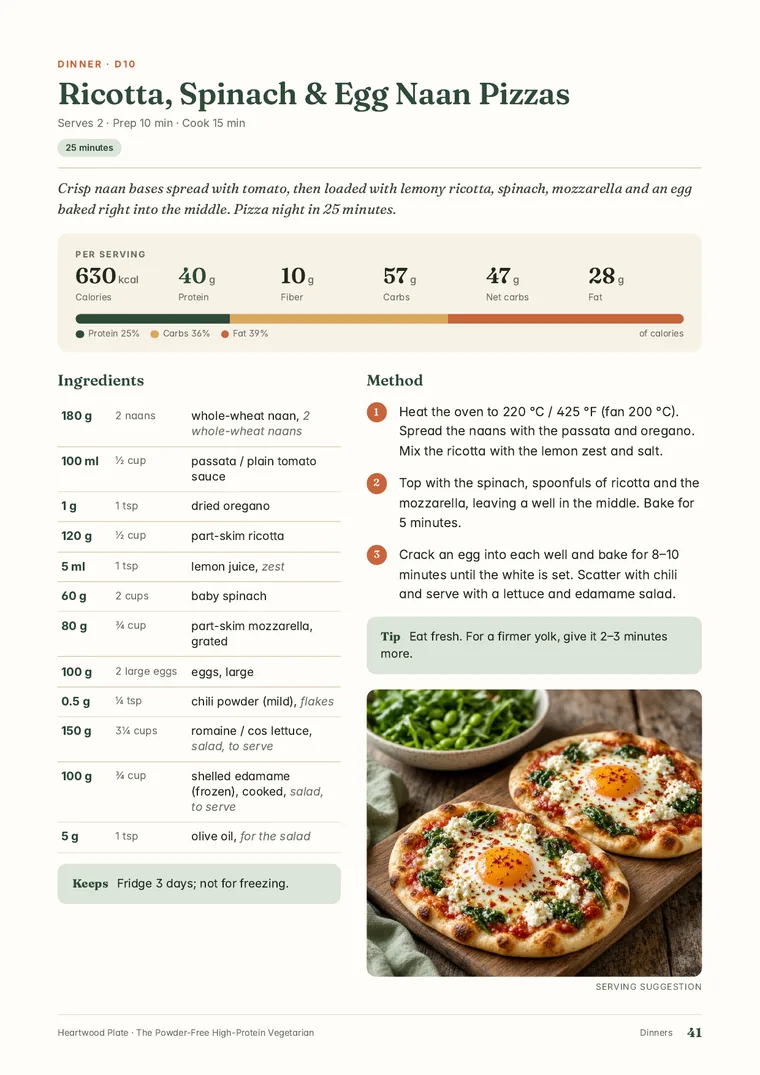
Ricotta, Spinach & Egg Naan Pizzas

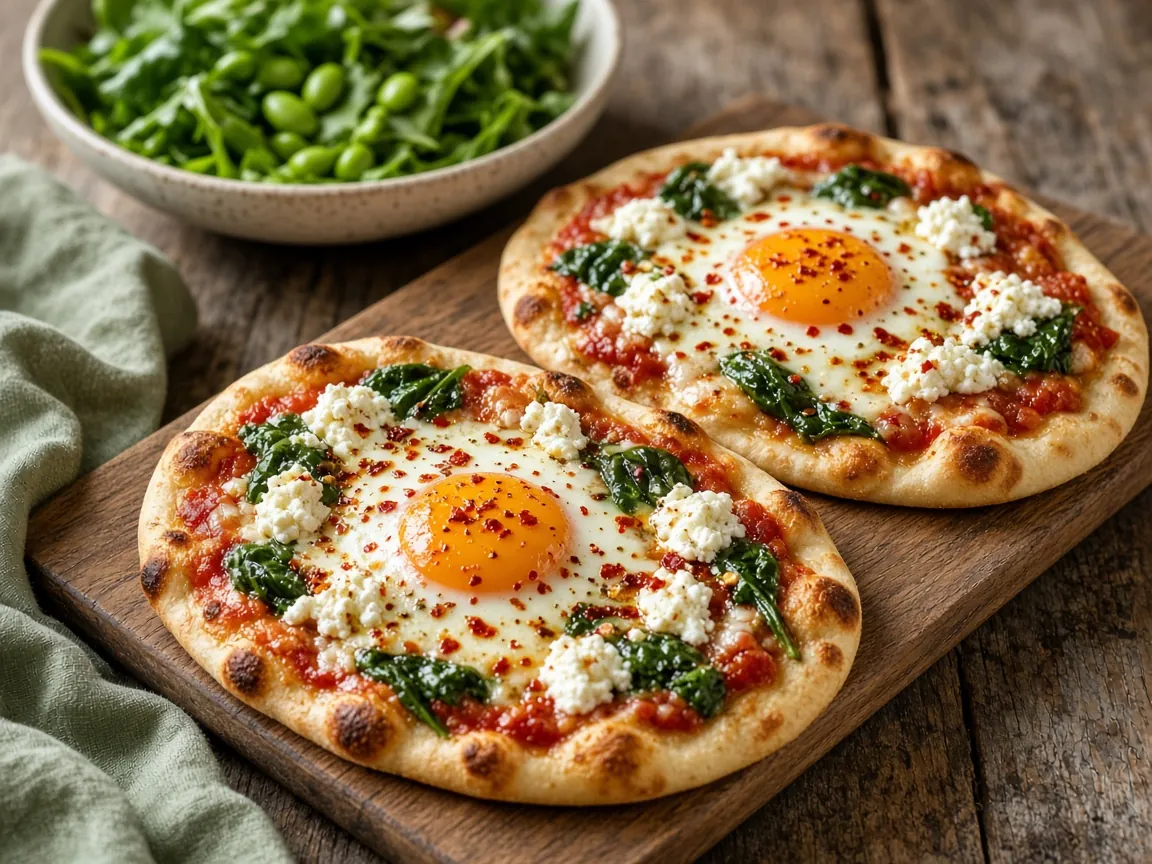
Ricotta, Spinach & Egg Naan Pizzas (serving suggestion)
Serving suggestion

Crisp naan bases spread with tomato, then loaded with lemony ricotta, spinach, mozzarella and an egg baked right into the middle. Pizza night in 25 minutes.

Serves 2 · Prep 10 min · Cook 15 min

630kcal
40 gprotein
10 gfiber
57 gcarbs
47 gnet carbs
28 gfat

Ingredients

  • 180 g (2 naans) whole-wheat naan, 2 whole-wheat naans
  • 100 ml (½ cup) passata / plain tomato sauce
  • 1 g (1 tsp) dried oregano
  • 120 g (½ cup) part-skim ricotta
  • 5 ml (1 tsp) lemon juice, zest
  • 60 g (2 cups) baby spinach
  • 80 g (¾ cup) part-skim mozzarella, grated
  • 100 g (2 large eggs) eggs, large
  • 0.5 g (¼ tsp) chili powder (mild), flakes
  • 150 g (3¼ cups) romaine / cos lettuce, salad, to serve
  • 100 g (¾ cup) shelled edamame (frozen), cooked, salad, to serve
  • 5 g (1 tsp) olive oil, for the salad

Method

  1. Heat the oven to 220 °C / 425 °F (fan 200 °C). Spread the naans with the passata and oregano. Mix the ricotta with the lemon zest and salt.
  2. Top with the spinach, spoonfuls of ricotta and the mozzarella, leaving a well in the middle. Bake for 5 minutes.
  3. Crack an egg into each well and bake for 8–10 minutes until the white is set. Scatter with chili and serve with a lettuce and edamame salad.

Tip: Eat fresh. For a firmer yolk, give it 2–3 minutes more.

Keeps: Fridge 3 days; not for freezing.

Cooking for more people? Scale this recipe with Cookverter, our free recipe scaler.

Nutrition per serving, calculated from USDA FoodData Central values. Brands vary. From page 41 of the book.

How we check the numbers

No guessed macros

Most recipe books don’t say where their nutrition numbers come from. Ours do.

  1. Each ingredient is matched to one entry in USDA FoodData Central, the US government’s public food database.
  2. A script multiplies each ingredient by its weight, totals each recipe and divides by servings, for protein, fiber, carbs, fat and calories. Cooking oil and “to serve” toppings are counted in full.
  3. Before every build, the stored values are re-checked against the USDA file. The build also stops if a recipe’s cook time doesn’t match the sum of its timed steps.
  4. Every ingredient’s FDC ID is printed in the back of the book so you can look it up yourself.
Start this week

The Powder-Free High-Protein Vegetarian

High-protein vegetarian meals from real, everyday food. No powders, no fake meat, no guesswork.

$17USD · one-time
  • 50-page PDF to read on any device or print
  • 30 original recipes with full nutrition
  • 4 weekly plans, cook plans and grocery lists
  • Vegetarian protein toolkit, tofu and tempeh how-to and food-safety guide
  • Metric and US measures, °C and °F
  • Free bonus: the Cookverter kitchen toolkit (cookverter.com)
Buy now · $17

Secure checkout with Stripe. Digital download: nothing is shipped.

Questions

Frequently asked

Do I need protein powder?

No. Every recipe gets its protein from ordinary foods: eggs, Greek yogurt, cottage cheese, ricotta, mozzarella, tofu, tempeh, edamame, lentils and beans.

How much protein?

Every breakfast, lunch and dinner has 29 g of protein or more, 37 g on average. The snacks are lighter, from 14 g up. Days average about 1,830 kcal (from 1,498 to 2,050) and 129 g of protein across four meals: breakfast, lunch, dinner and a snack. Need more? Add bread, fruit, rice or potatoes and keep the protein.

Is it vegan?

No. It is lacto-ovo vegetarian: the recipes use eggs and dairy. The swaps page has vegan ideas (silken tofu in place of Greek yogurt or cottage cheese, crumbled tofu for scrambled eggs), and notes that protein will usually be a little lower.

Do I have to like tofu?

It helps, but it isn’t everything. Tofu and tempeh share the plate with eggs, Greek yogurt, cottage cheese, ricotta, lentils and beans, and the book has a page on choosing, pressing and cooking tofu so it isn’t bland.

How were the numbers calculated?

Each ingredient is matched to a specific USDA FoodData Central entry, and a script adds them up per recipe and per day. The ID for every ingredient is printed in the book. Figures are estimates: brands vary.

I take medication or have a health condition. Is this right for me?

Please ask your doctor first. This book is general information, not medical advice, and is not designed for any medical condition. That matters especially if you have kidney or liver disease, diabetes, a digestive condition, have been told to limit protein, or are pregnant or breastfeeding.

What do I get, and how?

A 50-page PDF you can read on a phone, tablet or computer, or print. It is a digital download; nothing is shipped.