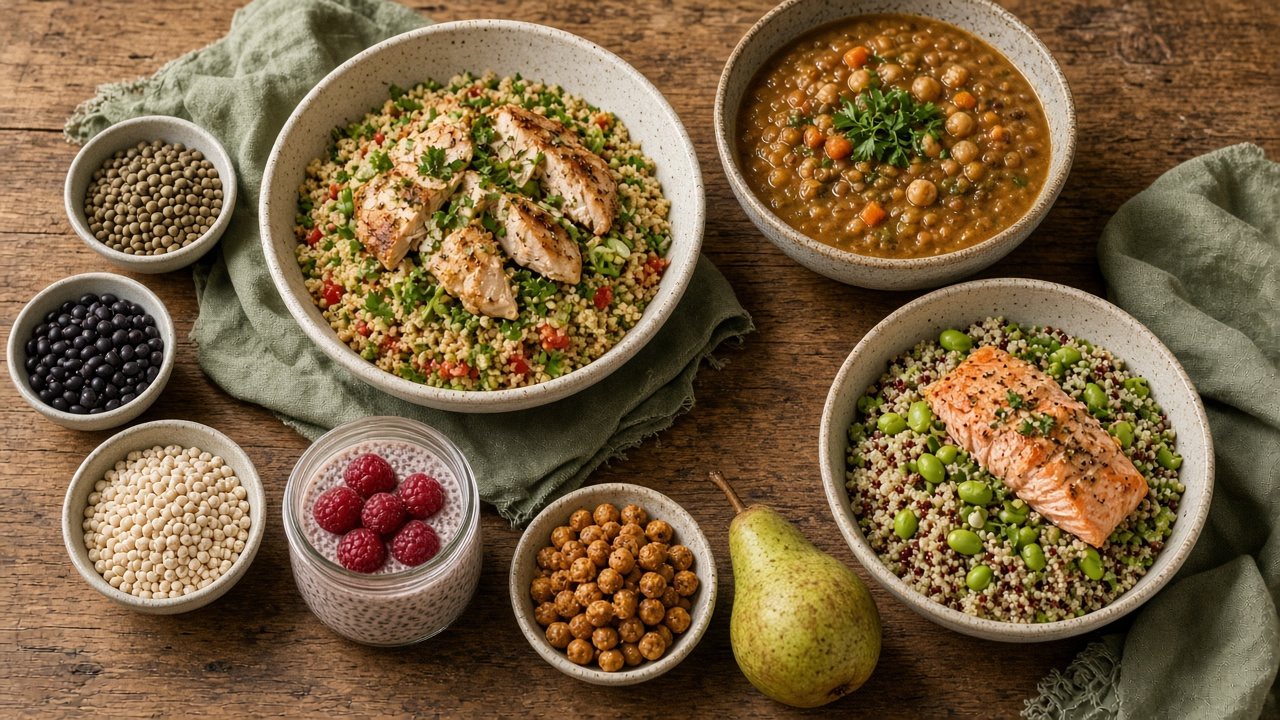
Bowls of lentils, beans, grains, seeds and fruit on a rustic table (serving suggestion)
High protein, high fiber recipes + a 4-week plan

Protein and fiber, on the same plate.

The Protein + Fiber Plan: 32 whole food high protein meals with 32 g+ protein and 7 g+ fiber in every breakfast, lunch and dinner, from beans, lentils, whole grains, vegetables and seeds. No protein powder. Four weekly plans and grocery lists, with every number calculated from USDA data.

  • 49-page PDF
  • Metric + US measures
  • Instant digital download

Plus: use the Cookverter kitchen toolkit for free.
Cover of The Protein + Fiber Plan
$17PDF
“I’m eating plenty of protein. Where’s the fiber?”Usually missing from high-protein plans.

Chicken, fish, eggs and dairy bring protein but no fiber. US surveys find that more than 90% of adults eat less fiber than recommended, and many high-protein plans make that gap wider.

This book pairs a lean protein with a plant one at every meal: chicken and lentils, turkey and black beans, salmon and edamame, eggs and chickpeas. That is how each breakfast, lunch and dinner reaches 32 g+ of protein and 7–12 g of fiber, without a scoop of anything.

Why it’s different

Protein and fiber recipes from everyday food

1

No protein powder

Every main lands at 32 g of protein or more from chicken, turkey, beef, fish, eggs, Greek yogurt, cottage cheese, tofu, beans and lentils.

2

Real fiber, from food

Every main has 7 g of fiber or more, from beans, lentils, whole grains, vegetables, fruit and seeds. No fiber supplements.

3

A plan that eases in

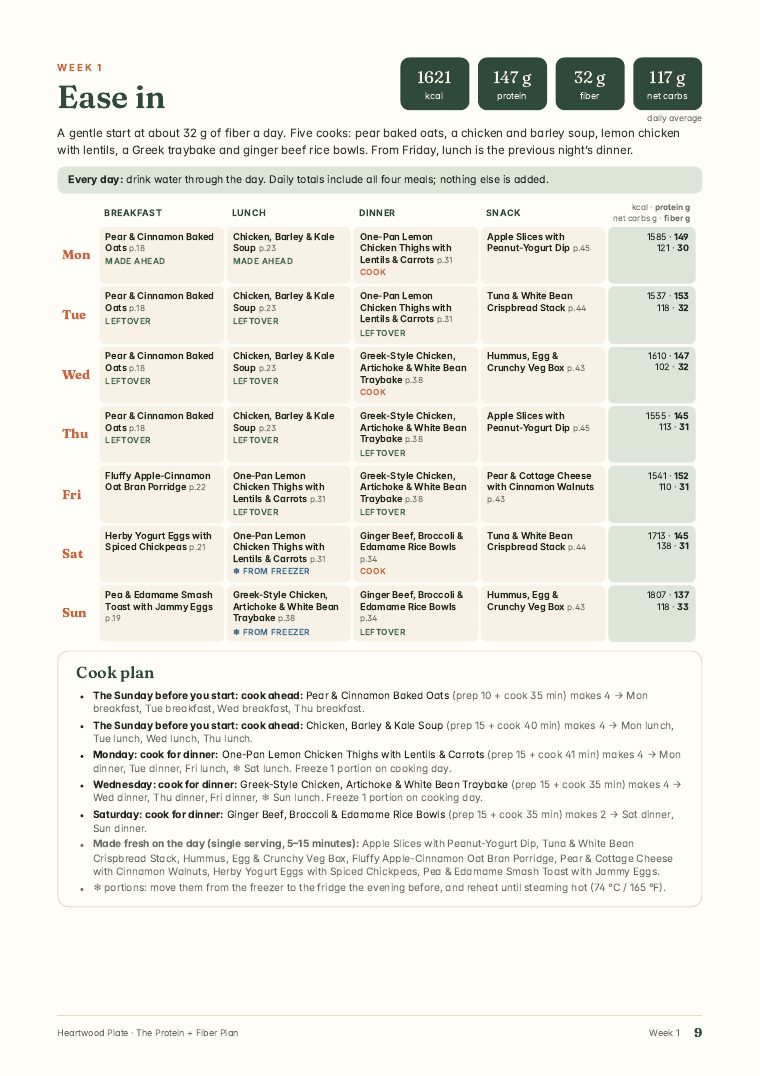
Week 1 is the gentlest at about 32 g of fiber a day. The book explains how to build up gradually and why water matters.

4

Batch cooking, mapped

Each week has a cook plan: what to make on Sunday and which nights, with leftovers and freezer portions planned in.

5

Numbers you can check

Every ingredient is matched to a USDA FoodData Central entry and added up by script. Every ID is printed in the book.

6

Metric and US

Grams with cups, spoons and ounces alongside. Oven temperatures in °C, °F and fan.

It’s for you if…

  • You want high protein meals that also bring real fiber
  • You’d rather eat beans, lentils and whole grains than shakes
  • You like cooking once and eating two or three times
  • You want a high fiber meal plan that tells you what to cook and buy each week
  • You want to know where the numbers come from

It’s not for you if…

  • You need a plan for a medical or digestive condition (ask your doctor or a dietitian)
  • You’ve been told to limit fiber or protein
  • You want a vegan book (it has vegetarian swaps, but most recipes use meat, fish, eggs or dairy)
  • You want to cut carbs right down (beans and whole grains are central here)
  • You want a physical book
The fiber families

Where the fiber comes from

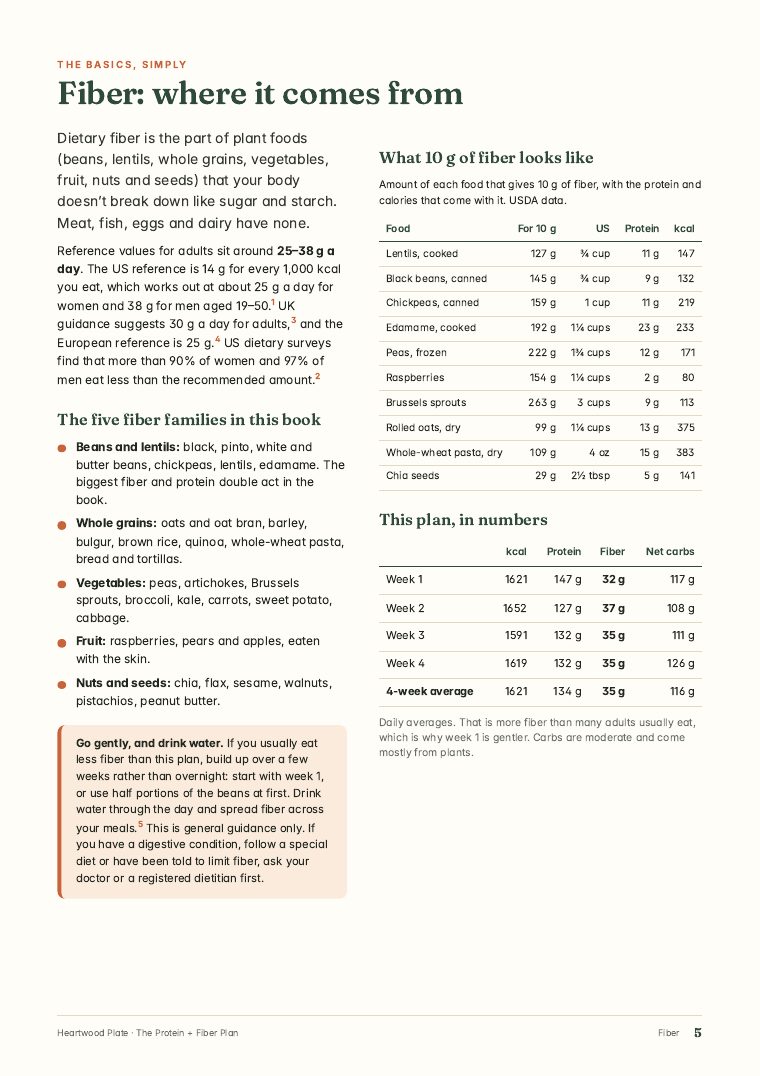
Reference values for adults sit around 25–38 g of fiber a day. The plan gets there with five everyday food groups, not supplements.

Beans & lentilsBlack, pinto, white and butter beans, chickpeas, lentils, edamame
Whole grainsOats and oat bran, barley, bulgur, brown rice, quinoa, whole-wheat pasta
VegetablesPeas, artichokes, Brussels sprouts, broccoli, kale, sweet potato
FruitRaspberries, pears and apples, with the skin
Nuts & seedsChia, flax, sesame, walnuts, pistachios, peanut butter

Go gently, and drink water. If you usually eat less fiber, build up over a few weeks and drink water through the day. This is general guidance only, not medical advice.

What’s inside

49 pages, 32 recipes, 4 weekly plans

134 gprotein a day in the plan, on average
35 gfiber a day (30–40 g)
1,621kcal a day
116 gnet carbs a day
Free bonus

Cookverter kitchen toolkit. Cooking in cups or ounces? Use our free online converters for volume, weight, oven temperature and cups to grams by ingredient, plus a recipe scaler, at cookverter.com.

Get the book · $17

Try a recipe free

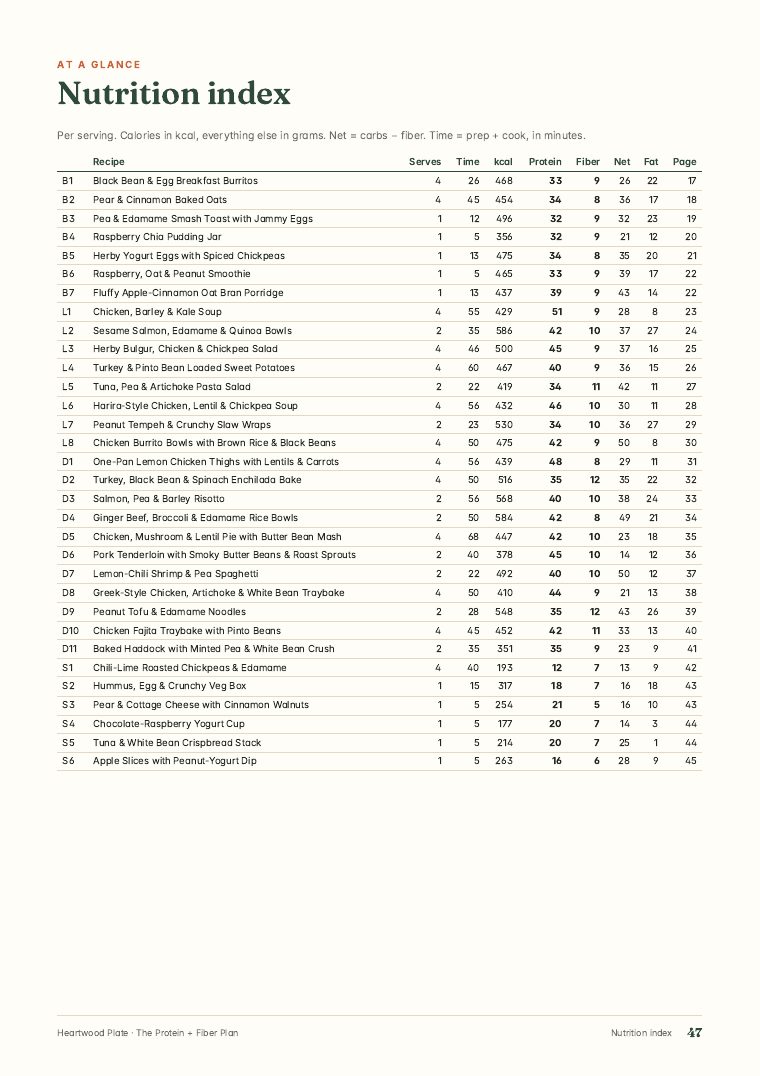
Chicken Burrito Bowls with Brown Rice & Black Beans

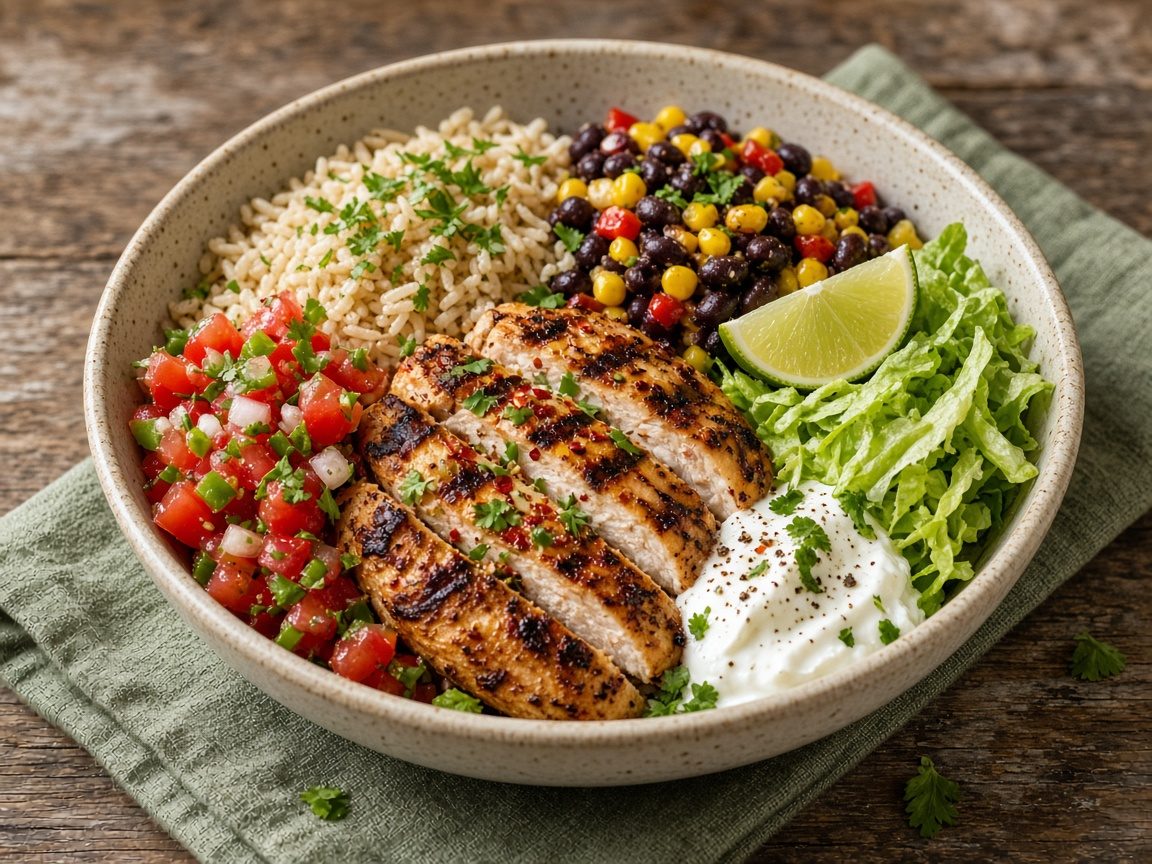
Chicken Burrito Bowls with Brown Rice & Black Beans (serving suggestion)
Serving suggestion

Everything you want from a burrito, in a box: chili-lime chicken, brown rice, black beans, sweetcorn, salsa and crunchy lettuce.

Serves 4 · Prep 15 min · Cook 35 min

475kcal
42 gprotein
9 gfiber
59 gcarbs
50 gnet carbs
8 gfat

Ingredients

  • 160 g (¾ cup) brown rice, dry
  • 500 g (1.1 lb) skinless chicken breast
  • 4 g (1½ tsp) chili powder (mild)
  • 3 g (1½ tsp) ground cumin
  • 30 ml (2 tbsp) lime juice
  • 10 g (2¼ tsp) olive oil
  • 240 g (1½ cups) black beans, drained, 1 can, drained
  • 200 g (1½ cups) frozen sweetcorn
  • 240 g (1 cup) tomato salsa
  • 200 g (4¼ cups) romaine / cos lettuce, shredded
  • 160 g (¾ cup) plain non-fat Greek yogurt, to serve

Method

  1. Rinse the rice and simmer in plenty of water for 25–30 minutes until tender. Drain, return to the pan and leave covered for 5 minutes.
  2. Meanwhile, rub the chicken with the chili, cumin, half the lime, the oil and salt. Cook in a skillet over a medium heat for 12–14 minutes, turning once, until it reaches 74 °C / 165 °F. Rest, then slice.
  3. Warm the black beans and sweetcorn together in the microwave or a pan, and season with the remaining lime.
  4. Divide the rice, beans and corn, chicken, salsa and lettuce between 4 boxes. Add the yogurt when you serve.

Tip: Cool the rice quickly (spread it on a tray) and refrigerate within 1 hour. Reheat the rice, beans and chicken until piping hot; add the cold toppings afterwards.

Keeps: Fridge 3 days; not for freezing.

Cooking for 2 or 6 instead of 4? Scale this recipe with Cookverter, our free recipe scaler.

Nutrition per serving, calculated from USDA FoodData Central values. Brands vary.

How we check the numbers

No guessed macros

Most recipe books don’t say where their nutrition numbers come from. Ours do.

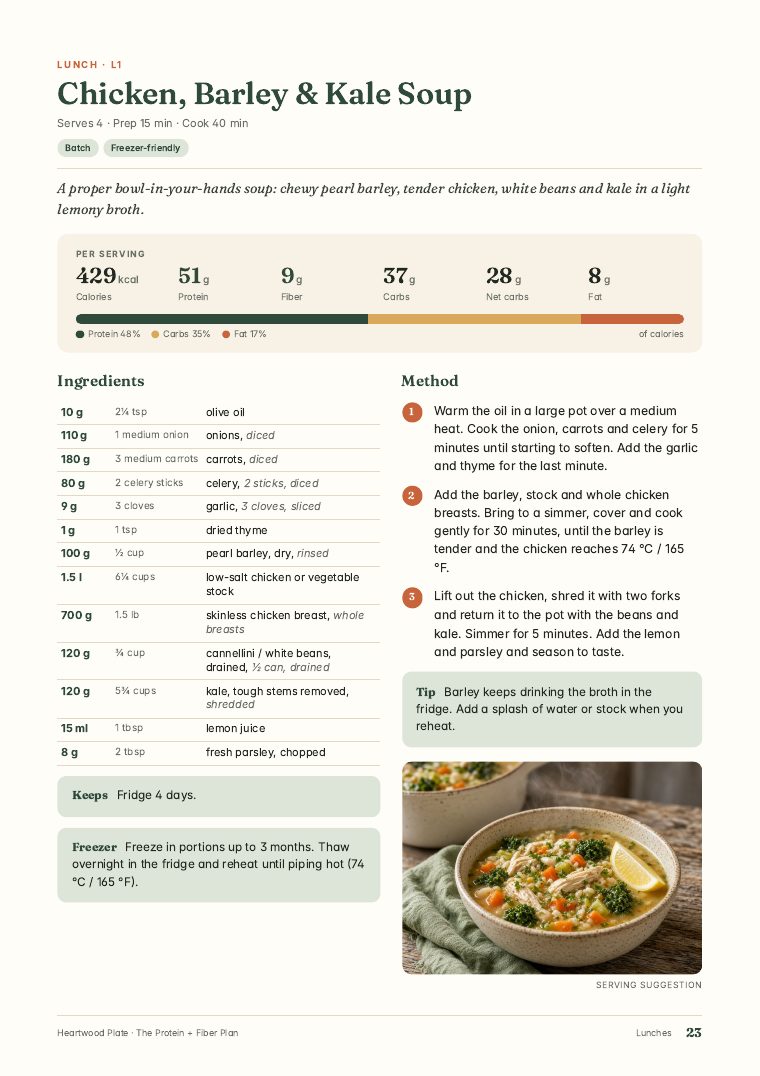
  1. Each ingredient is matched to one entry in USDA FoodData Central, the US government’s public food database.
  2. A script multiplies each ingredient by its weight, totals each recipe and divides by servings, for protein, fiber, carbs, fat and calories.
  3. Before every build, the stored values are re-checked against the USDA file. If anything differs, the build stops.
  4. Every ingredient’s FDC ID is printed in the back of the book so you can look it up yourself.
Start this week

The Protein + Fiber Plan

High protein high fiber meals from real, everyday food. No powders, no supplements, no guesswork.

$17USD · one-time
  • 49-page PDF to read on any device or print
  • 32 original recipes with full nutrition, fiber included
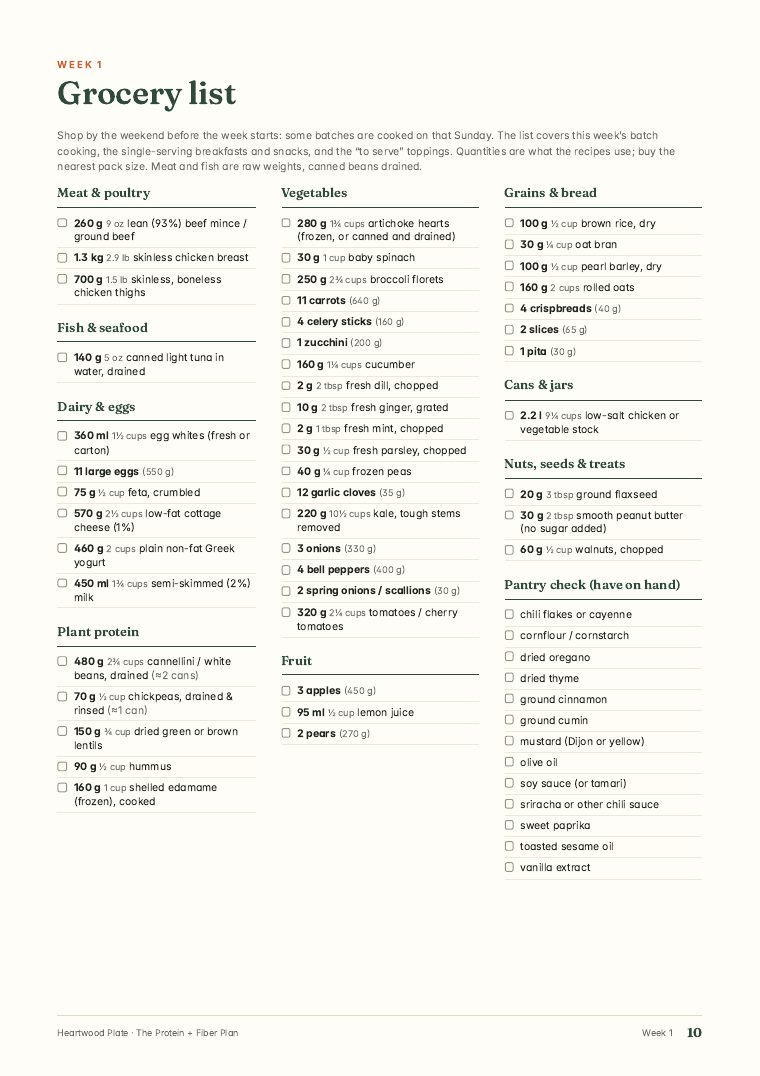
  • 4 weekly plans, cook plans and grocery lists
  • Fiber explainer, kitchen basics and food-safety guide
  • Metric and US measures
  • Free bonus: the Cookverter kitchen toolkit (cookverter.com)
Buy now · $17

Secure checkout with Stripe. Digital download: nothing is shipped.

Questions

Frequently asked

Do I need protein powder or fiber supplements?

No. Every recipe gets its protein and fiber from ordinary foods: chicken, turkey, fish, eggs, Greek yogurt, cottage cheese, tofu, beans, lentils, whole grains, vegetables, fruit and seeds.

How much fiber is in the plan?

Days average about 35 g of fiber (from 30 to 40 g), with week 1 the gentlest at about 32 g. That is more than many adults usually eat, so the book suggests building up over a few weeks and drinking water through the day. That is general guidance, not medical advice.

How much protein?

Every breakfast, lunch and dinner has 32 g of protein or more. Plan days average about 134 g.

How many calories is the plan?

Days average about 1,621 kcal across four meals (breakfast, lunch, dinner and a snack). The book shows easy ways to add or remove food so it fits you.

Is it lower carb?

Moderately. Days average about 116 g of net carbs, mostly from beans, lentils, whole grains, fruit and vegetables. It is not designed to cut carbs right down.

Is it vegetarian?

Some recipes are, and the book has vegetarian swaps, but most meals use chicken, turkey, beef, pork, fish or eggs.

How were the numbers calculated?

Each ingredient is matched to a specific USDA FoodData Central entry, and a script adds them up per recipe and per day. The ID for every ingredient is printed in the book. Figures are estimates: brands vary.

I take medication or have a health condition. Is this right for me?

Please ask your doctor first. This book is general information, not medical advice, and is not designed for any medical condition. That matters especially if you have a digestive or kidney condition, have been told to limit fiber or protein, or are pregnant.

What do I get, and how?

A 49-page PDF you can read on a phone, tablet or computer, or print. It is a digital download; nothing is shipped.