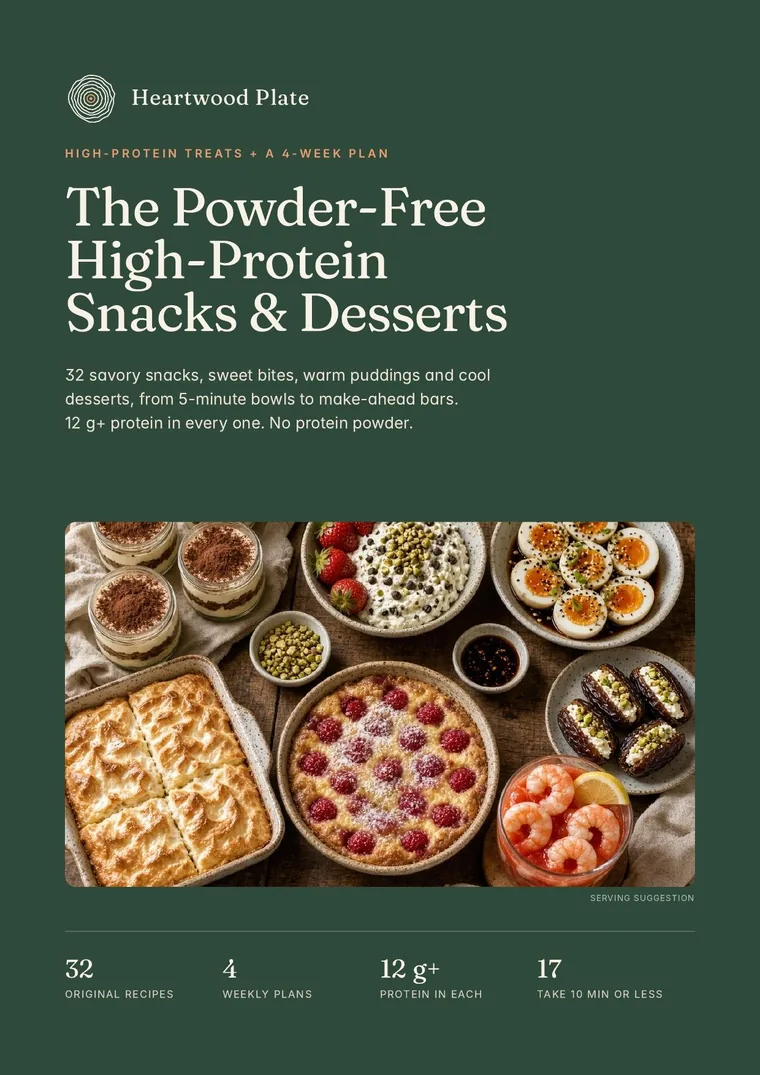
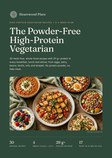
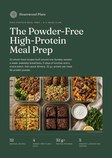
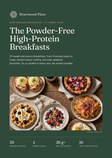
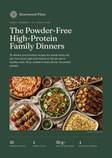
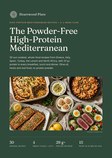
A table of high-protein snacks and desserts: tiramisu jars, cheese bars, pretzel bites, buffalo dip and stuffed dates (serving suggestion)
High-protein snacks & desserts + a 4-week plan

Treats that pull their weight.

The Powder-Free High-Protein Snacks & Desserts: 32 savory snacks, sweet bites, warm puddings and cool desserts, from 5-minute bowls to make-ahead bars. 12 g+ protein in every one. No protein powder. Four weekly plans and grocery lists, with every number calculated from USDA data.

  • 52-page PDF
  • Metric + US measures
  • Instant digital download

Plus: use the Cookverter kitchen toolkit for free.

Cover of The Powder-Free High-Protein Snacks & Desserts
$17PDF
Snacks and desserts are where protein usually goes missing: crackers, biscuits, a bar that is mostly sugar.From the welcome page.

They don’t have to be, and you don’t need a tub of powder to fix it.

This book has 32 snacks and desserts, every one with at least 12 g of protein (on average 23 g) from cottage cheese, Greek yogurt, ricotta, eggs, milk, lean meat, fish and beans. Half are savory snacks and sweet bites; half are warm and cool desserts, including a few Hungarian and European classics. 17 are ready in 10 minutes or less.

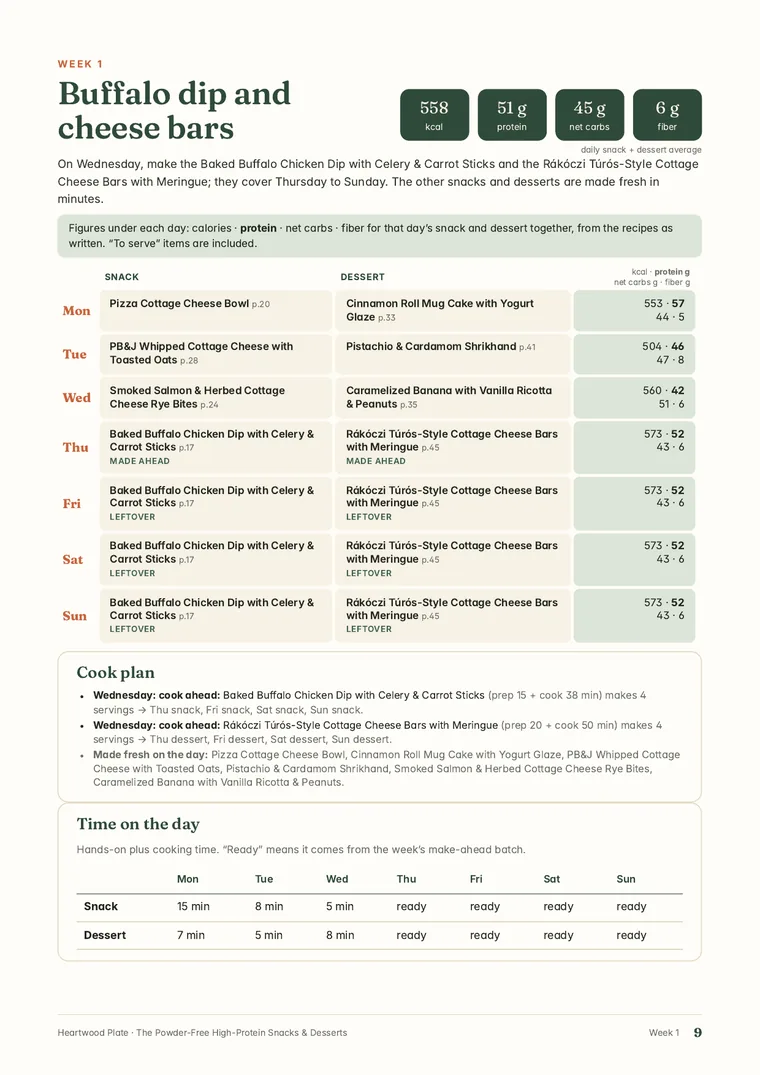
The 4-week plan gives you one snack and one dessert for every day. Each week has one make-ahead snack and one make-ahead dessert that cover four days each, and quick fresh recipes for the other three. All 32 recipes are used once.

Why it’s different

Treats that pull their weight.

1

No protein powder

Every snack and dessert has 12 g of protein or more (23 g on average), from cottage cheese, Greek yogurt, ricotta, eggs, milk, lean meat, fish and beans.

2

Desserts that count

Half are savory snacks and sweet bites; half are warm and cool desserts, including a few Hungarian and European classics.

3

Ready in minutes

17 recipes are ready in 10 minutes or less, and eight make-ahead recipes make four portions each.

4

One snack, one dessert

The 4-week plan gives you one snack and one dessert for every day. Each week has one make-ahead snack and one make-ahead dessert that cover four days each. All 32 recipes are used once.

5

Numbers you can check

Every ingredient is matched to a USDA FoodData Central entry and added up by script. Every ID is printed in the book.

6

Metric and US

Grams with cups, spoons and ounces alongside. Oven temperatures in °C and °F, for conventional and fan ovens.

It’s for you if…

  • You have a sweet tooth and want treats with real protein
  • You’re tired of crackers, biscuits and sugary bars
  • You like quick, 10-minute recipes
  • You’re curious about classics like túrógombóc and Kaiserschmarrn
  • You want make-ahead snacks for the week

It’s not for you if…

  • You need a plan for a medical condition (ask your doctor or a dietitian)
  • You’ve been told to limit protein
  • You want full meals planned (this book covers one snack and one dessert a day)
  • You avoid dairy completely (cottage cheese, Greek yogurt and ricotta are the main building blocks)
  • You want a physical book
From the contents page

What’s in the 52 pages

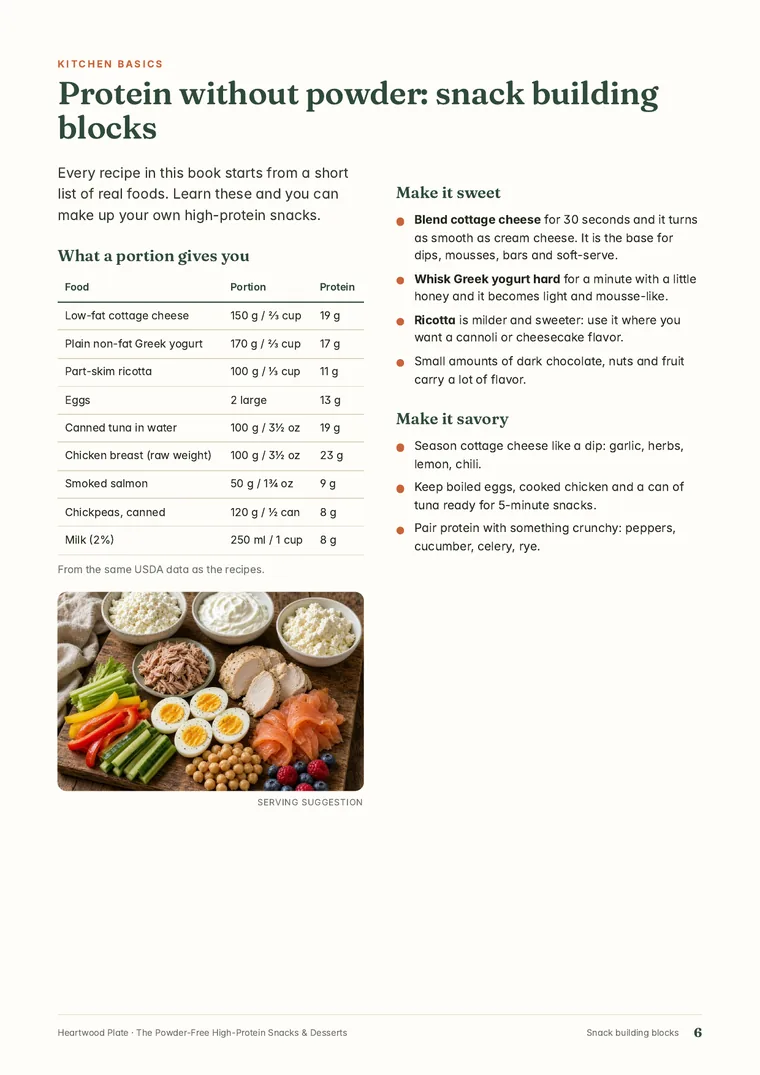
Kitchen basics on pages 6–7: Protein without powder: snack building blocks and Make-ahead treats and how to keep them. Then four weeks of plans and grocery lists, the recipe chapters, swaps and a nutrition index.

SectionWhat it isPages
WelcomeWhy this bookp. 3
How to use this bookHow the plan worksp. 4
Protein, from real foodKitchen basicsp. 5
Protein without powder: snack building blocksKitchen basicsp. 6
Make-ahead treats and how to keep themKitchen basicsp. 7
Storing, freezing and food safetyKitchen basicsp. 8
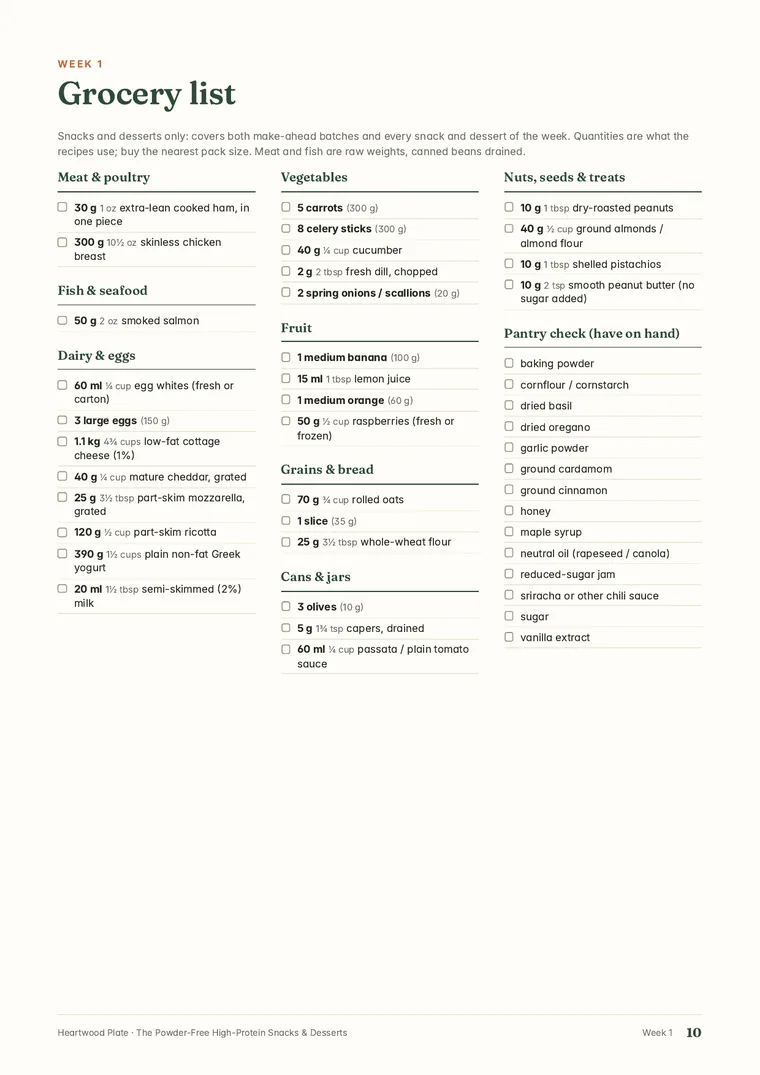
Week 1: Buffalo dip and cheese barsPlan + grocery listp. 9–10
Week 2: Jammy eggs and clafoutisPlan + grocery listp. 11–12
Week 3: Pretzel bites and custard potsPlan + grocery listp. 13–14
Week 4: Cookie dough dip and tiramisuPlan + grocery listp. 15–16
Savory Snacks10 recipesp. 17–26
Sweet Snacks6 recipesp. 27–32
Warm Desserts8 recipesp. 33–40
Cool Desserts & Bakes8 recipesp. 41–48
Swaps and substitutionsSwapsp. 49
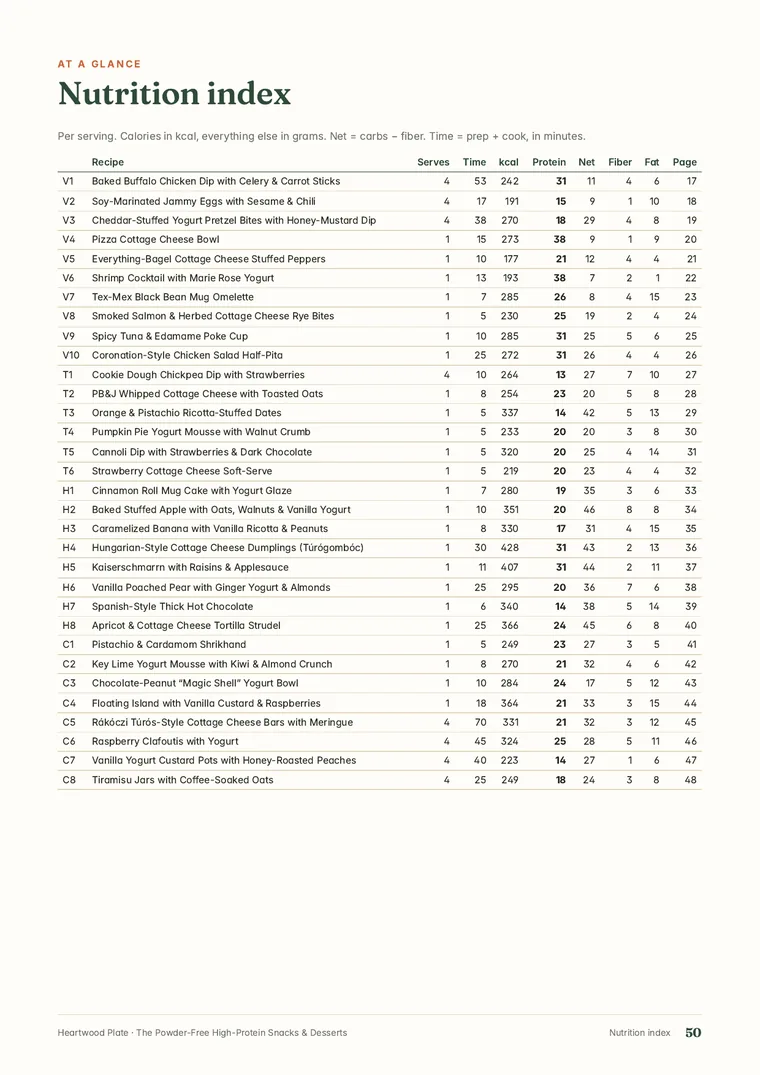
Nutrition indexAll 32 recipes at a glancep. 50
How we calculated + sourcesMethod and sourcesp. 51
What’s inside

52 pages, 32 recipes, 4 weekly plans

43 gprotein a day from one snack + one dessert
551kcal a day for both, on average
17recipes ready in 10 min or less
8make-ahead recipes, 4 portions each
Free bonus

Cookverter kitchen toolkit. Cooking in cups or ounces? Use our free online converters for volume, weight, oven temperature and cups to grams by ingredient, plus a recipe scaler, at cookverter.com.

Get the book · $17

Try a recipe free

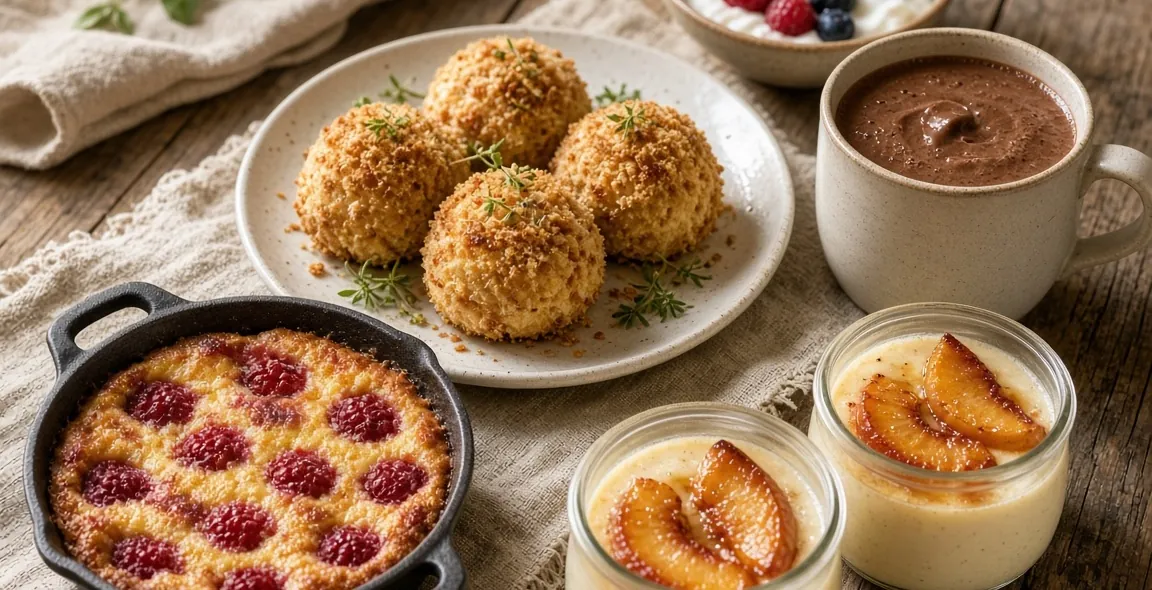
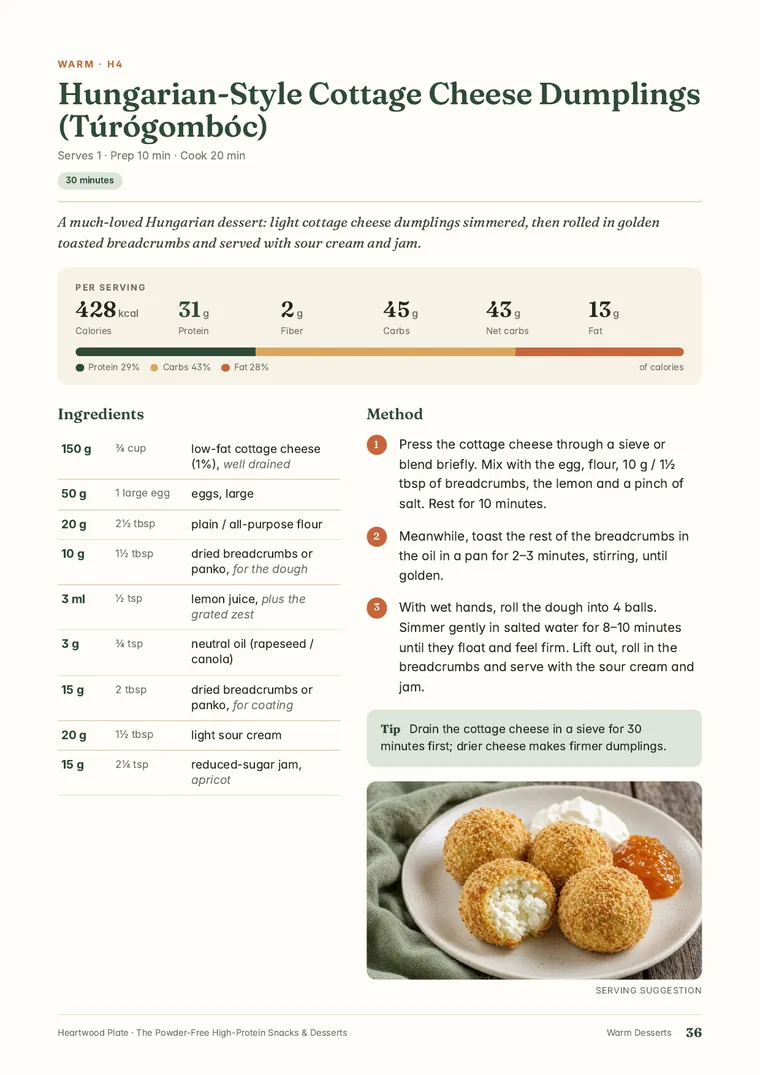
Hungarian-Style Cottage Cheese Dumplings (Túrógombóc)

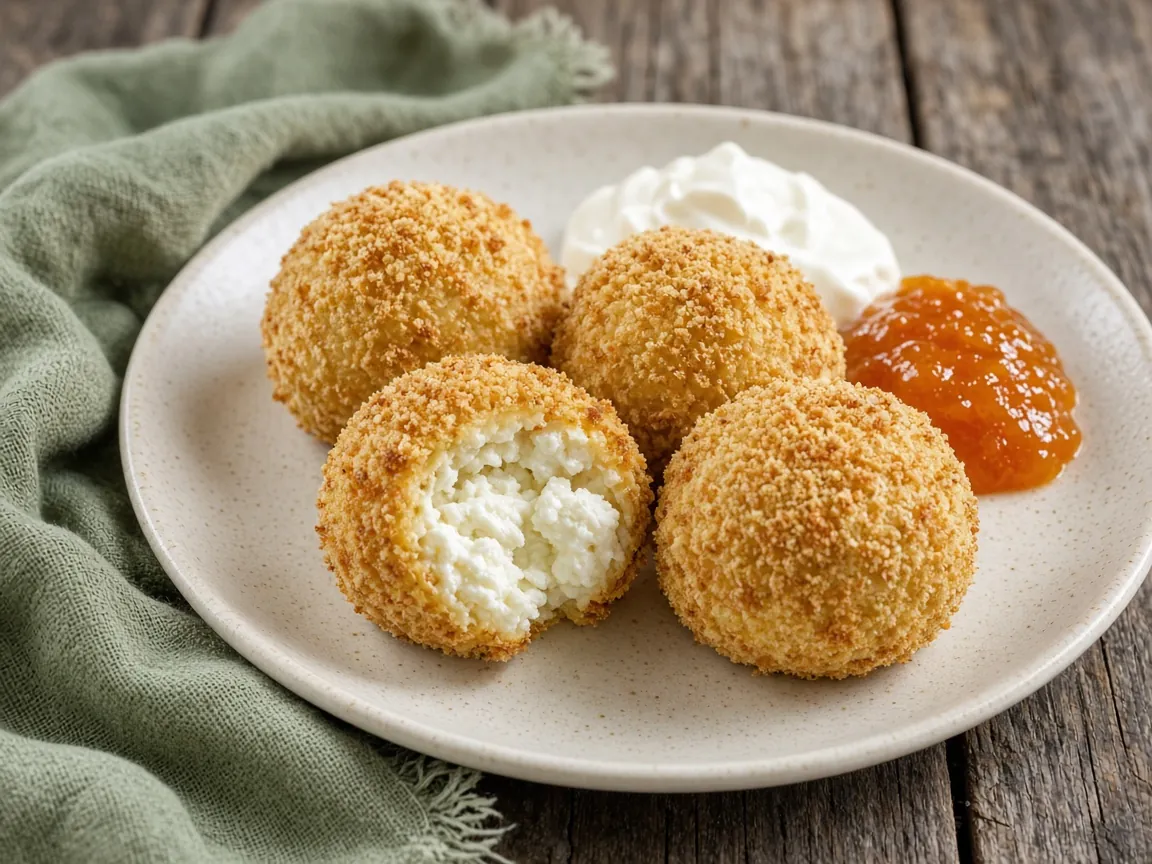
Hungarian-Style Cottage Cheese Dumplings (Túrógombóc) (serving suggestion)
Serving suggestion

A much-loved Hungarian dessert: light cottage cheese dumplings simmered, then rolled in golden toasted breadcrumbs and served with sour cream and jam.

Serves 1 · Prep 10 min · Cook 20 min

428kcal
31 gprotein
2 gfiber
45 gcarbs
43 gnet carbs
13 gfat

Ingredients

  • 150 g (¾ cup) low-fat cottage cheese (1%), well drained
  • 50 g (1 large egg) eggs, large
  • 20 g (2½ tbsp) plain / all-purpose flour
  • 10 g (1½ tbsp) dried breadcrumbs or panko, for the dough
  • 3 ml (½ tsp) lemon juice, plus the grated zest
  • 3 g (¾ tsp) neutral oil (rapeseed / canola)
  • 15 g (2 tbsp) dried breadcrumbs or panko, for coating
  • 20 g (1½ tbsp) light sour cream
  • 15 g (2¼ tsp) reduced-sugar jam, apricot

Method

  1. Press the cottage cheese through a sieve or blend briefly. Mix with the egg, flour, 10 g / 1½ tbsp of breadcrumbs, the lemon and a pinch of salt. Rest for 10 minutes.
  2. Meanwhile, toast the rest of the breadcrumbs in the oil in a pan for 2–3 minutes, stirring, until golden.
  3. With wet hands, roll the dough into 4 balls. Simmer gently in salted water for 8–10 minutes until they float and feel firm. Lift out, roll in the breadcrumbs and serve with the sour cream and jam.

Tip: Drain the cottage cheese in a sieve for 30 minutes first; drier cheese makes firmer dumplings.

Cooking for more people? Scale this recipe with Cookverter, our free recipe scaler.

Nutrition per serving, calculated from USDA FoodData Central values. Brands vary. From page 36 of the book.

How we check the numbers

No guessed macros

Most recipe books don’t say where their nutrition numbers come from. Ours do.

  1. Each ingredient is matched to one entry in USDA FoodData Central, the US government’s public food database.
  2. A script multiplies each ingredient by its weight, totals each recipe and divides by servings, for protein, fiber, carbs, fat and calories. Cooking oil and “to serve” toppings are counted in full.
  3. Before every build, the stored values are re-checked against the USDA file. The build also stops if a recipe’s cook time doesn’t match the sum of its timed steps.
  4. Every ingredient’s FDC ID is printed in the back of the book so you can look it up yourself.
Start this week

The Powder-Free High-Protein Snacks & Desserts

High-protein snacks and desserts from real, everyday food. No powders, no chalky bars, no guesswork.

$17USD · one-time
  • 52-page PDF to read on any device or print
  • 32 original recipes with full nutrition
  • 4 weekly snack and dessert plans and grocery lists
  • Snack building blocks, make-ahead treats and food-safety guide
  • Metric and US measures, °C and °F
  • Free bonus: the Cookverter kitchen toolkit (cookverter.com)
Buy now · $17

Secure checkout with Stripe. Digital download: nothing is shipped.

Questions

Frequently asked

Do I need protein powder?

No. Every recipe gets its protein from ordinary foods: cottage cheese, Greek yogurt, ricotta, eggs, milk, lean meat, fish and beans.

How much protein?

Every snack and dessert has 12 g of protein or more, 23 g on average. One snack and one dessert a day average about 551 kcal and 43 g of protein together. They are meant to sit alongside your usual meals.

Are they really desserts?

Yes: warm puddings, mug cakes, dumplings, custard pots, clafoutis and tiramisu jars, alongside savory snacks and sweet bites. They still contain sugar from fruit, honey or chocolate; the nutrition panel on every recipe shows it all.

Are they vegetarian?

All the sweet snacks and desserts are vegetarian (the book says to check yogurt and jam labels for gelatin). Some savory snacks use chicken, ham, tuna, salmon or shrimp, and the swaps page has vegetarian options.

How were the numbers calculated?

Each ingredient is matched to a specific USDA FoodData Central entry, and a script adds them up per recipe and per day. The ID for every ingredient is printed in the book. Figures are estimates: brands vary.

I take medication or have a health condition. Is this right for me?

Please ask your doctor first. This book is general information, not medical advice, and is not designed for any medical condition. That matters especially if you have kidney or liver disease, diabetes, a digestive condition, have been told to limit protein, or are pregnant or breastfeeding.

What do I get, and how?

A 52-page PDF you can read on a phone, tablet or computer, or print. It is a digital download; nothing is shipped.